
Entry in the Register of Companies creates the company, not the signature
Company formation and corporate services in Italy
About us +39 02 555 9876 info@company-in-italy.com
We register Italian companies for founders who live outside Italy: the form, the notarial deed, the filing that creates the company, and the tax numbers that follow. For an S.r.l. funded in cash, with no travel.
Entry in the Register of Companies creates the company, not the signature

S.r.l. capital EUR 10 000, or from EUR 1 paid in full

An S.r.l. deed can be signed by video conference from abroad

No Italian bank account is needed before an S.r.l. is registered
Five deliverables, in the order they arrive. Each is a document or a number the Italian state issues.

Atto costitutivo and statuto, taken by an Italian notary. The statuto is part of the deed and prevails where the two conflict (Art. 2328(3) c.c.).

The notary files within 10 days, and the company exists from its entry in the Register of Companies, not from the signature (Art. 2331 c.c.).

One Comunicazione Unica filing opens the tax code, the partita IVA under an ATECO 2025 code, and the INPS and INAIL positions.

A company PEC, a digital signature for register filings, and the director's own domicilio digitale, which may not be the company's.

Diritto annuale within 30 days, draft accounts to the members within 120 days of year end, filed within 30 days of approval, Redditi SC for FY2025 by 2 November 2026.
Also handled here: a subsidiary or branch, a representative office, a registered or virtual office with nominee support, a bank account, crypto and payment licensing, trade marks.
What the company needs once it exists, and the authorisations some businesses need before they can trade. Pricing is on request.
An S.r.l. already in the Register, passed to you by transfer of quotas.
A company of its own: it answers for its own debts, and the parent's balance sheet stays out of reach.
A sede secondaria gives a foreign company a trading presence without incorporating anything.
The lightest presence: registered in the REA alone, and outside permanent-establishment tax.
An address the Register will accept, and the certified mailbox that has to sit behind it.
We do not sell the product. We read the address you have against what a registered office must be.
Statutory books, the monthly VAT settlement, the LIPE, and the annual accounts in XBRL.
A compliance exercise, not a formality. We take the application to a provider that will run it.
Italian law recognises no nominee director. We arrange the one mechanism it does, a MIMIT fiduciaria.
Authorisation as a crypto-asset service provider, granted by CONSOB under Article 63 MiCAR.
Two separate authorisations sit behind one search term, and Banca d'Italia grants both.
Nationally at UIBM, EU-wide at EUIPO, or through the Madrid System.
The form settles the capital you commit, how much is paid on day one, and where that money goes. In detail: S.r.l., S.r.l.s., S.p.A., all forms compared.
| Form | Minimum capital | Paid up on incorporation | Paid to | Article |
|---|---|---|---|---|
| S.r.l. | EUR 10 000 | 25% of cash; 100% with a sole member | the management body in the deed | Artt. 2463, 2464(4) c.c. |
| S.r.l., low capital | EUR 1 to EUR 9 999 | 100%, cash only; 1/5 of profit reserved to EUR 10 000 | the management body | Art. 2463(4)(5) c.c. |
| S.r.l.s. | EUR 1 to EUR 9 999 | 100% on incorporation | the management body | Art. 2463-bis(2)(3) c.c. |
| S.r.l. incorporated online | as for an S.r.l. | S.r.l. rules, cash only | the notary's dedicated account | D.Lgs. 183/2021 Art. 2(1) |
| S.p.A. | EUR 50 000 | 25%; 100% on a unilateral deed | a bank, before the deed | Artt. 2327, 2342(2) c.c. |
Only one of the three mechanisms requires a bank before incorporation, and it applies to the S.p.A. alone. An S.r.l. signed in person: paid to the management body named in the deed, no bank account needed, Art. 2464(4) c.c. An S.r.l. incorporated online: bank transfer to the notary's dedicated account, D.Lgs. 183/2021 Art. 2(1). An S.p.A.: deposited with a bank before the deed, at least 25%, Art. 2342(2) c.c.
The claim that an Italian company needs EUR 120 000 of share capital does not match Artt. 2327, 2463 and 2463-bis c.c.
Nine steps run from the tax code to the first chamber fee, and only four carry a statutory deadline. The sequence is: codice fiscale, notarial deed in person or by video conference, capital paid in, the notary files the deed within 10 days, entry in the register which is the moment legal personality arises, Comunicazione Unica with 5 days for the chamber and 7 days for the agencies, partita IVA and ATECO 2025, the director's domicilio digitale, and the first diritto annuale within 30 days. The risk branch applies to the S.p.A. alone: an S.p.A. not registered within 90 days sees the sums returned and the deed lose effect under Art. 2331(4) c.c.
Chamber tariffs are regional: the duties above are CCIAA Romagna rev. 16 of 27 January 2026, the annual fee CCIAA Marche 2026, whose 20% surcharge not every chamber applies. The EU's three-working-day, EUR 100 target (Your Europe) binds member states, not an Italian chamber.
Describe what you want to run in Italy and we will tell you which form carries it.
The constraint is often not the procedure but a date: a tender, a contract, a landlord.
The quotas are transferred and the management body replaced, rather than a company formed.
You inherit a history rather than start one, so the diligence differs.
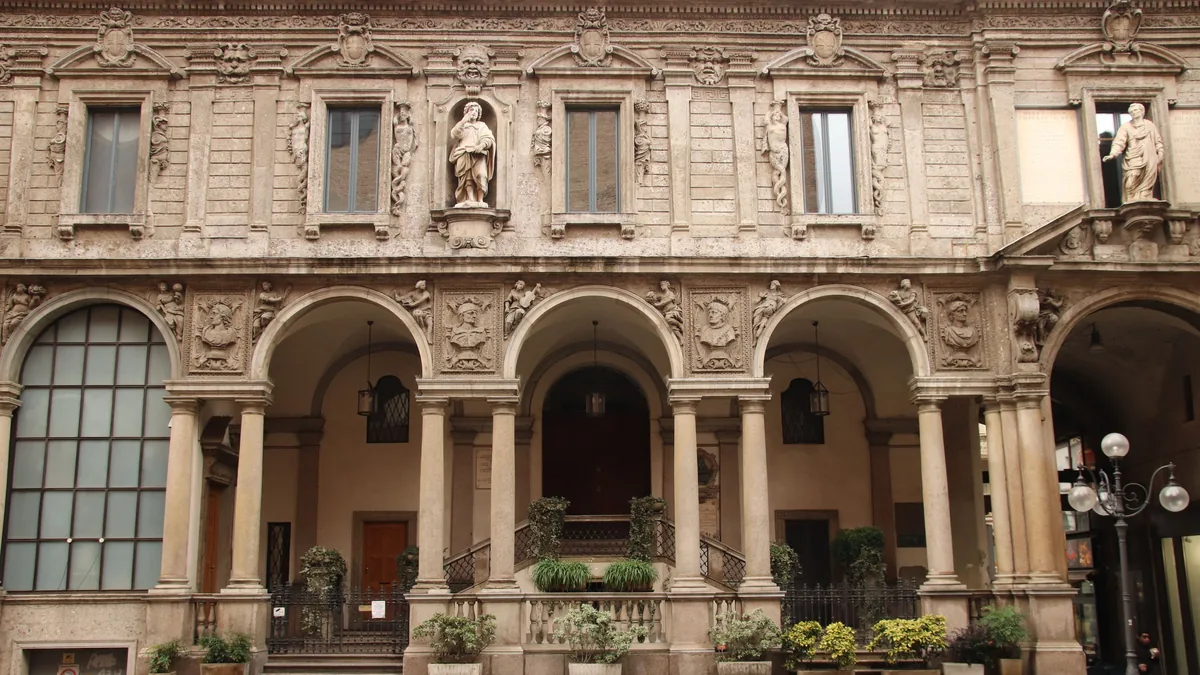
An S.r.l. seated in Italy and funded in cash is signed by video conference; see starting a business in Italy.
A subsidiary, a branch or a representative office, chosen on the parent's exposure.
Crypto-asset services under MiCA and payment institutions supervised by Banca d'Italia need authorisation before trading.
Visa routes run alongside the company, starting with the Italia Startup Visa.
From our practice. The consular appointment for a first codice fiscale is the one step money cannot accelerate. The Italian bank account arrives in almost every enquiry as a settled fact that, for an S.r.l., it is not.

For an S.r.l. the cash goes to the management body named in the deed (Art. 2464(4) c.c.). The corporate account follows registration.

Under the rules in force from 31 October 2025 a director needs a personal domicilio digitale, and it may not be the company's.

No Italian residence is required of a member or a director. A third-country founder still meets Art. 16 of the preliminary provisions, and a foreign legal entity a Foreign Ministry check.

Every threshold, deadline and duty on this page names its source. The beneficial owner register is active since 9 January 2026, with its deadlines left to a pending decree.
The advisers who do the work: Giulia Mancini in Milan and Alessandro Ferri in Rome. The team · About us
Not for an S.r.l. Cash contributions are paid to the management body appointed in the deed, and the means of payment are recorded in the deed. In an online incorporation the transfer goes to the notary's dedicated account. An S.p.A. is different: at least 25% must be deposited with a bank before the deed.
Yes. The Civil Code sets no Italian residence requirement for quotaholders or directors, and a director need not be a member. A non-EU founder is subject to the reciprocity condition in Art. 16 of the preliminary provisions; holders of an Italian investor residence permit are exempt from that check.
For an S.r.l. or S.r.l.s. with its seat in Italy and cash contributions only, yes. Since 15 December 2021 a notary can receive the deed as an electronic public deed with the founders joining by video conference on the notariat platform, and can issue an electronic signature to a party who has none.
The part fixed by law is measured in days: the deed is signed in one day, the notary has 10 days to file it, the chamber confirms registration to the company PEC within 5 days and the other authorities report within 7 days. Obtaining a codice fiscale abroad, legalisation and a bank account stretch the calendar.
Registration tax is EUR 200, stamp duty on the notarial deed EUR 156 without a property contribution, stamp duty on register filings EUR 65, secretarial fees for registering the deed EUR 90, and the first annual chamber fee EUR 100 to EUR 120 within 30 days. Notary fees have had no official tariff since 2012.
No registration is entirely free, but an S.r.l.s. incorporated on the standard template is exempt from stamp duty and secretarial fees, and no notary fees are due. The trade-off is a standard set of articles whose clauses cannot be varied, and founders who must all be individuals.
EUR 10 000. The Civil Code also allows capital between EUR 1 and EUR 9 999, in which case contributions must be in cash and paid in full, and at least one fifth of annual net profit goes to a reserve until capital plus reserve reach EUR 10 000. An S.p.A. needs EUR 50 000.
An Italian codice fiscale, obtained by a non-resident at the Italian consulate in the country of residence, with an in-person appointment for a first application. A digital signature for register filings. And, since the rules in force from 31 October 2025, a personal domicilio digitale that differs from the company's.
An Italian company is set up by a notarial public deed. The notary files the deed with the Register of Companies within 10 days, and the company acquires legal personality on the date of that entry. The tax code, VAT number and INPS and INAIL positions are opened by a single Comunicazione Unica filing.
The first annual chamber fee is due within 30 days of the registration application. The draft annual accounts go to the members within 120 days of the financial year end, and approved accounts to the register within 30 days of approval. Redditi SC for FY2025 is due by 2 November 2026.
Updated 14 September 2026. This page describes the rules in force at that date and does not replace advice on a specific case.
Next step
Describe the structure you have in mind and we will tell you what it takes in Italy: the form, the filings, the timeline and what we would need from you. Pricing on request.